

work is love made visible
on who is feeding us and what that means

Last year, I was interviewed for a podcast for and about private chefs (find it here) by my German colleague, fellow chef Hannes Henche. It was a really fun conversation. We talked about a lot of things that neither of us planned to, making it quite genuine and off the cuff, which honestly makes for a great podcast- like you’re just eavesdropping on two chefs shooting the shit. We both laughed a lot and learned from each other.
Something that Hannes said really stuck with me. We were talking about the stereotypical toxic culture of the culinary industry, the restaurant world in particular, and he mentioned something his wife once said, which is: “I don’t want to eat food made by angry people anymore.”
Wow. Even now, the power in that statement floors me. I don’t want to eat food made by angry people anymore.
Those of you who have known me long enough have likely heard me tell one of my favorite stories, which is from Laura Esquivel’s novel Como Agua Para Chocolate (“Like Water For Chocolate”). The protagonist, Tita, is heartbroken because the man she loves is betrothed to her sister. She is unfortunately tasked with making their wedding cake, and as she labors over it, she cries bitterly in despair- inadvertently infusing her tears into the batter. The next day at the wedding, all the guests who have eaten the cake begin to weep, suddenly recalling and grieving lost loves of their own.
I have always cherished this story as a perfect metaphor about food, the cooks that prepare it, and the almost mystical way in which cooks seem to imbue their very selves into their dishes. Anyone who’s ever had a loving home-cooked meal from a parent, grandparent, auntie or dear friend can attest to this phenomenon. Food that’s made with love, with care, with intention, tastes... incredible, unbelievable. It’s somehow fulfilling on a deeper level, beyond just satisfying corporeal hunger. And the very same dish made by one person, using identical ingredients in identical quantities, can taste totally different when made by someone else.
I learned this early on in life when my mom, sister and I tried to replicate my bubbe’s (grandma’s) food at home. My bubbe wasn’t a grand or overly intricate cook. We always ate the same dinner at her house- spaghetti with red sauce, oven potato wedges, and a salad with canned kidney and garbanzo beans dressed in a mixture of store-bought Italian and ranch dressing. I can still so clearly taste each element of this meal, just as vividly as if I’d eaten it yesterday. The whole family loved this humble comforting spread- a clear nod to the midcentury American culture in which my bubbe cooked for and raised her children. We would linger over the table, helping ourselves to seconds and thirds, savoring each bite until we were full to the point of that wonderful punch-drunk, satiated stupor.
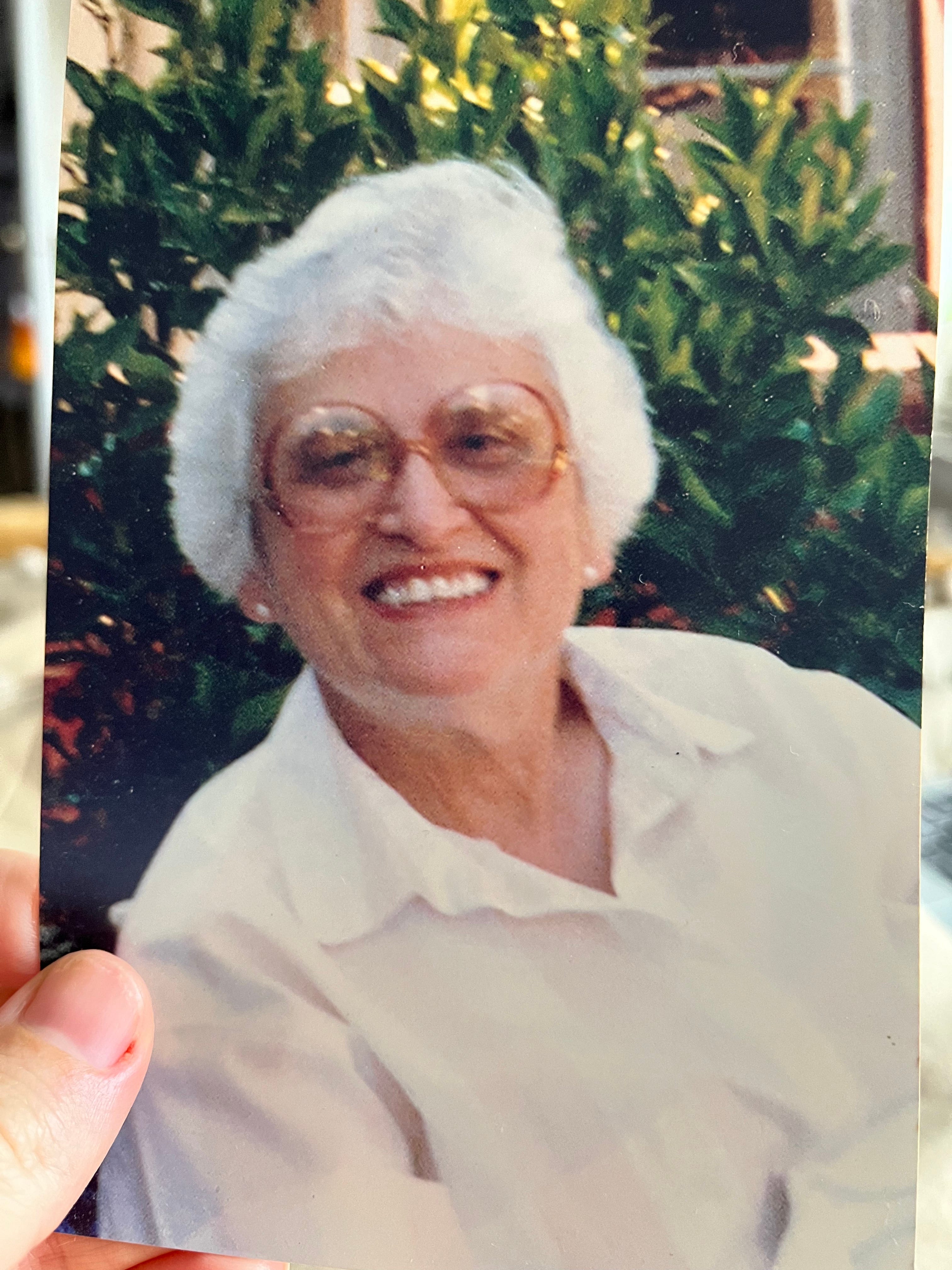
My mom, sister and I took note of every single branded product she used. Ragu pasta sauce, Barilla spaghetti, Kraft powdered parmesan, Hidden Valley ranch- armed with the right tools, we set out confidently to recreate our bubbe’s classic dinner in our own home. And- we all agreed with a tinge of disappointment- it was never ever the same. Was it her specific cookware? The water in her kitchen? Or just….. our bubbe’s love, her hands, her spirit? Whatever unique and ethereal touch she used to bring that modest meal to life was subtly, but palpably, missing.
This bit of arcane culinary wisdom continues to echo in my mind whenever I’m speaking or thinking about the food world, and the ways in which it is beginning to change- at a glacial pace, but changing nonetheless. Shows like The Bear, or even its coarser reality predecessors like various Gordon Ramsay jawns or even Chopped, have been piquing the public’s interest about who’s making their food, and what’s happening in the kitchens where their food is being prepared. As the inner workings of the culinary world get more press and airtime (and even glamor), the world at large is gaining some insight into a culture that industry folks have known all too well for decades- and it’s a culture that needs some work.
In the last several years, exposé after exposé has been written about what really happens in the world’s most acclaimed kitchens. In December of 2020, Eater published former Momofuku sommelier Hannah Selinger’s amazing incisive review/response (I highly recommend you read it) to David Chang’s newly released and widely celebrated memoir, “Eat A Peach”; in it, Selinger describes in agonizing detail a culture of flagrant misogyny and disrespect, outright cruelty, and toxic rage that were part and parcel of working under Chang as he rose to fame and fortune. This is the same fame and fortune, incidentally, that afforded him the opportunity to write a bestselling memoir capitalizing on his culinary war stories in the first place- a memoir in which he reveals himself to be unable or unwilling to self-reflect on the scope of the damage he left in his wake during his rise to the top (Chang, despite this, naturally remains a mainstay in the culinary world stage- with his own bestselling line of grocery items and a new show coming out that he will cohost with Chrissy Teigen). In 2022, several articles were published about Eleven Madison Park’s rollout of their plant-based menu, specifically their “farm to trash” pipeline that meant throwing out massive amounts of edible food that was the wrong size or shape, while waxing poetic about the urgency of a more sustainable meatless model. The irony, of course, is the highly unsustainable working conditions staff endured (80 hour weeks at $15/hr for commis chefs preparing $335/person prix fixe menus, to be exact), meaning turnover was incredibly high and staffing shortages were constant. I personally remember they were posting job openings on social media for like six months straight.
And just a few weeks ago, a truly horrifying news story (content warning: violent sexual assault) surfaced about a brutal hazing incident at a Michelin-starred hotel restaurant in France, which was filmed and posted to social media before being taken down. I’ll spare you the details, but they made my stomach turn. The executive chef, a 31 year old man who has been described as a “gastronomic prodigy”, refuted the allegations that he condoned such behavior or created a culture of hazing, denying that any such incident happened (despite video evidence) and claiming such accusations were “an attack on my honor”. Despite his pearl-clutching, he ultimately resigned. His lawyer later explained the hazing ritual was a good-natured “joke”.
I often say that the main reason I’ve largely avoided the restaurant industry in my career is because I don’t like men yelling at me. It’s a cute soundbyte, but the truth is that professional kitchens run by “old guard” brigade system devotees can be dangerous places- especially for women and other marginalized people like queer folks and BIPOC. While I was reading about the French hazing incident on social media, I noticed several chefs in the comments section- some of whom I’m familiar with in the NYC scene, virtually all white males- making light of the story with wisecracks and sarcasm. I’m not kidding, I almost threw my phone across the room in a blind rage. It’s not just the abuse itself that’s dangerous- it’s the industry sycophants who continue to act like this is all fine, that this is just how it is, that “if you can’t take the heat….”
So yeah. I really don’t care how beautiful or fancy your food is, how many accolades your establishment has, or what kind of “prodigy” you are. I don’t want to eat food made by angry people anymore. Show me the raison d’etre that drew most of us to cooking in the first place- the significance of choosing food as our life’s work, the humble magic of what it means to feed people. Show me the respect for the cooks that have gone before us, and I don’t mean the Marco Pierre Whites or the Escoffiers. I mean the generations of nonnas and bubbes and abuelas, the keepers of millennia of culinary wisdom and tradition, way before a man ever set foot in a professional kitchen. I don’t want your anger, your ego, your unkindness. I want love in my food. And I believe you can taste the difference.
In one of my favorite books of all time, The Prophet, Kahlil Gibran writes in a treatise on work: “And what is it to work with love?
It is to weave the cloth with threads drawn from your own heart, even as if your beloved were to wear that cloth. It is to build a house with affection, as if your beloved were to dwell in that house. It is to sow seeds with tenderness and reap the harvest with joy, even as if your beloved were to eat the fruit.
…Work is love made visible. And if you cannot work with love but only with distaste, it is better that you should leave your work and sit at the gate of the temple and take alms of those who work with joy. For if you bake bread with indifference, you bake a bitter bread that feeds but half a man’s hunger.”
Work- and cooking- is love made visible, folks. May you be fed with love- wholly and completely. xx
Kayla, this is such a wonderful piece. Delicious in fact. Thank you ❣️❣️
Love this!!